Armstrong and Other Astronauts Train in Iceland
Operation NapoleonArmstrong and Other Astronauts Train in Iceland was both a genuine training visit and, in Michael Thompson’s account, a cover for a highly secret military operation on Vatnajökull. The public explanation—that Iceland’s interior resembled the lunar landscape—won a welcoming response, while the visit diverted attention from a major American movement of troops and equipment. The episode makes a celebrated space-age story part of a more concealed history of surveillance, military planning, and a plane on the glacier.
Origins of the 1967 operation
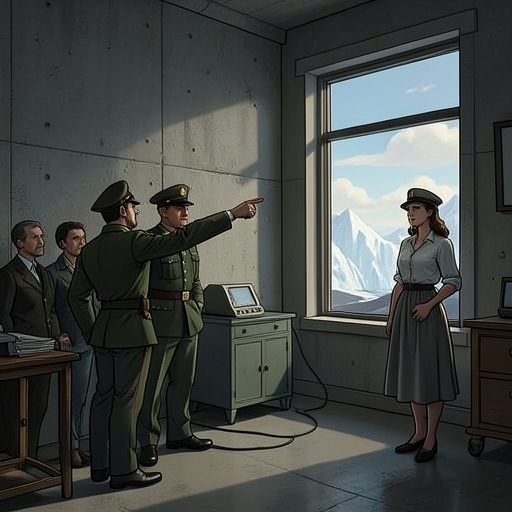
The account reaches the event through a conversation with Kristín and Steve. Asked about the astronauts, Thompson recalls that Neil Armstrong and other American astronauts came to Iceland for training two years before Armstrong landed on the moon. Thompson had not taken part in the 1967 operation; he says Leo Stiller told him about it afterward. The distinction matters: the expedition is presented not as Thompson’s firsthand recollection, but as a story passed from a participant to a later witness and then to Kristín and Steve.
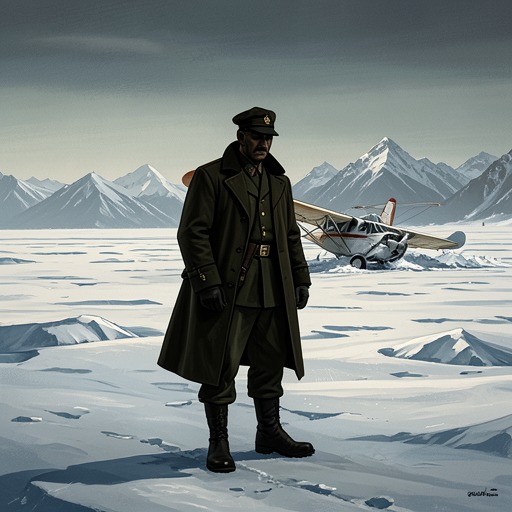
The immediate lead to the operation came earlier in 1967, when Stiller was in command of surveillance flights. During one flight, he thought he saw something on the ice. He flew back and forth over the area, taking photographs. The account does not establish precisely what he saw, but it connects his observation to the subsequent effort to investigate the glacier—and to the secret operation for which the astronauts’ visit provided cover.
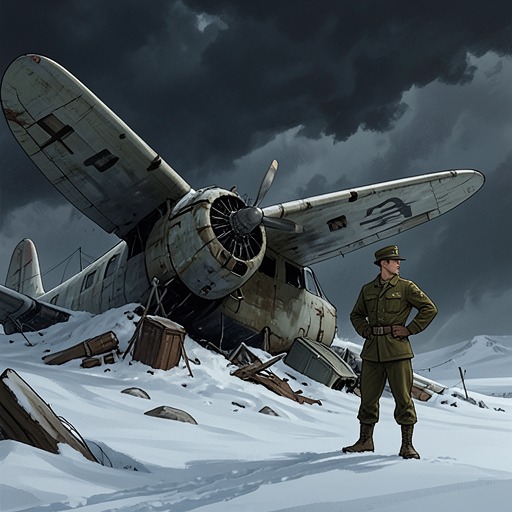
An attempt to land a helicopter failed. It was the middle of winter, and the conditions prevented that approach. The response was a small expeditionary force equipped with a metal detector. Afterward, preparations began for a much larger operation, conducted in what Thompson describes as the utmost secrecy. Yet secrecy did not mean that the activity went unnoticed: in Iceland’s small community, people heard about it.
The astronauts as public cover
The choice of astronauts drew on an existing public fascination. In the summer of 1965, a group of astronauts made an incognito refuelling stop at Keflavík. The press office decided to capitalize on the stop, and the resulting story caught the public imagination. Captain Parker, a pilot with the United States Defense Force at Keflavík who flew Scorpion fighter jets, was in charge of the group.
When a discreet expedition to Vatnajökull became necessary in 1967, Parker proposed inviting Armstrong. By then Armstrong had commanded the Gemini 8 mission, so his presence was expected to attract even greater attention. The invitation therefore had a double effect: it brought a prominent astronaut to Iceland for training, and it gave the military activity a public explanation powerful enough to draw notice away from troop movements. The earlier publicity around the 1965 stopover supplied the model; Armstrong’s subsequent fame amplified it.
The announced training took place in lava fields north of Vatnajökull. The explanation offered to Icelanders was that the interior landscape resembled conditions on the moon. Thompson dismisses that rationale as preposterous, arguing that it was designed to deflect attention from the largest movement of American troops and equipment in Iceland since the war. The account thus turns a familiar image of astronauts preparing for space into a carefully staged explanation for military manoeuvres on the ground.
Secrecy, discovery, and significance
Thompson places the cover story within Iceland’s sensitivity to troop movements, especially at the time of the operation. The astronauts’ popularity made that sensitivity easier to work around: Icelanders welcomed them, and the supposed lunar resemblance helped make the training exercises seem plausible. The public story did not need to conceal every manoeuvre. It needed to give those manoeuvres an acceptable context and direct attention toward the astronauts instead.
The event also changes how the earlier surveillance flight reads. Stiller’s photographs and the failed helicopter landing precede the small metal-detector expedition; the astronaut visit belongs to the preparations for a larger, secret undertaking. Thompson leaves the object of the search unresolved in this account, referring only to whatever the plane contains. That withheld answer gives the episode its tension: the conspicuous visit is explained, but the reason for the hidden operation remains only partially exposed.
The narrative’s layered telling reinforces that uncertainty. Thompson recounts a story Stiller told him, openly acknowledging that he was not involved himself. His account brings the secret behind the astronaut exercise into view while preserving the distance between a reported observation, a covert military response, and the still-unsettled contents of the plane. Armstrong’s public visit is therefore more than an incidental backdrop: it is the mechanism by which a celebrated event could mask activity on the glacier.